
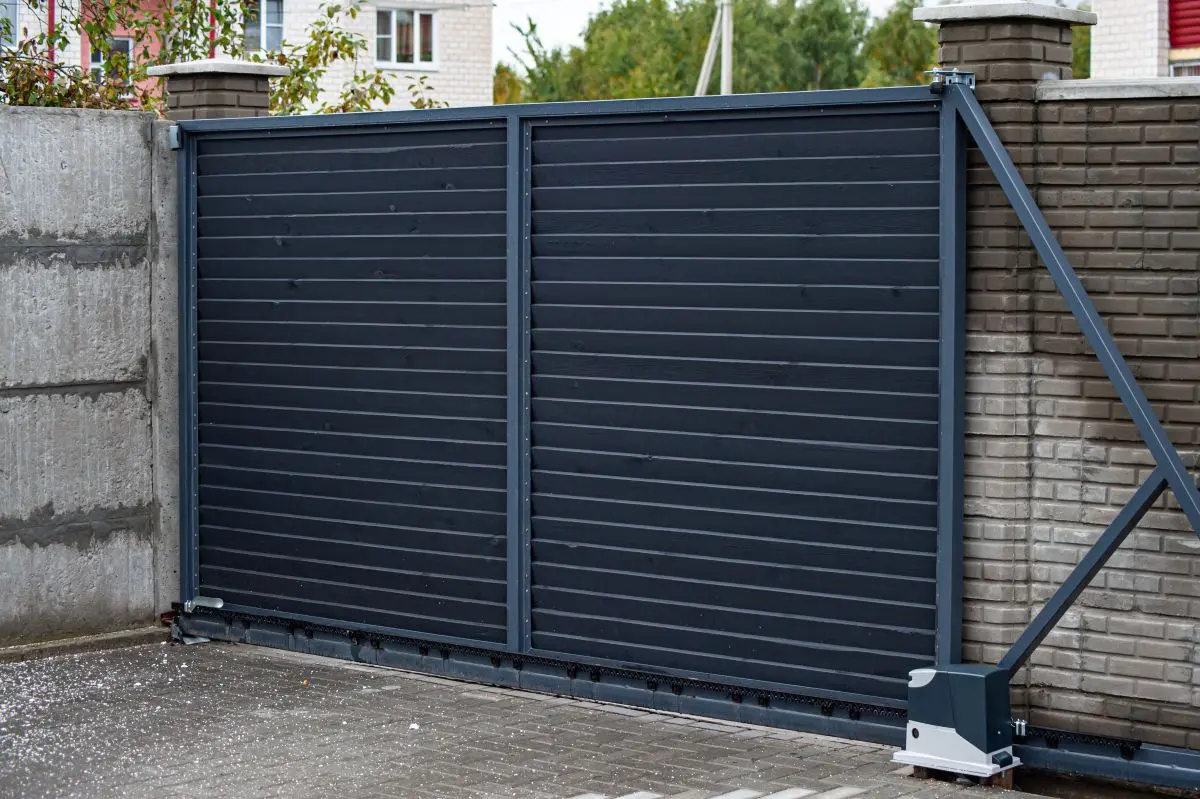
A slide gate operator is the motorized system that opens and closes a sliding gate by moving it sideways along a track or rail, and choosing the right one comes down to your gate’s weight, length, and how often it will run. For homeowners and property managers weighing an upgrade in 2026, understanding the three main drive types and their real costs makes it far easier to pick an operator that will run reliably for years. This guide breaks down each type, the price ranges you can expect, and the key features to look for before you buy.
Here is what you will learn in the sections below:
- Three drive types: How chain, rack-and-pinion, and rail-drive operators differ and which suits your gate.
- Real costs: Concrete price ranges for operators and professional installation so you can budget accurately.
- Buying criteria: The weight ratings, duty cycles, and safety features that matter most when choosing.
Understanding Slide Gate Operators
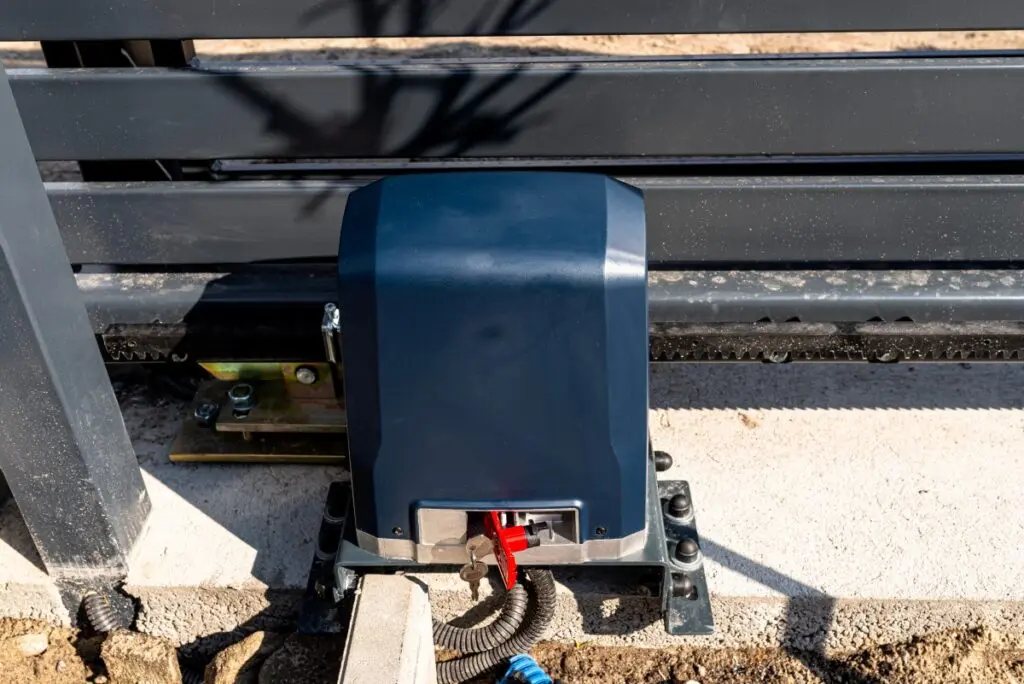
A slide gate operator combines a motor, a gearbox, and a drive mechanism with a control board that responds to remotes, keypads, and safety sensors. Knowing how these operators work and where they fit makes the comparison of drive types that follows much clearer.
How a Slide Gate Operator Works
A slide gate operator works by using a motor and gearbox to drive a mechanism that pulls the gate sideways along a track or cantilever rail. The control board is the brain of the system, receiving signals from remotes, keypads, and sensors and instructing the motor when to open or close. Limit switches or magnetic encoders tell the operator exactly where the gate should stop in each direction, preventing overtravel. Because a sliding gate moves laterally rather than swinging, these operators suit properties with slopes, limited swing room, or long, heavy gates that a swing operator could not handle.
- Motor and gearbox: Provide the power that moves the gate along its track.
- Control board: Receives signals and directs the motor to open or close.
- Limit control: Switches or encoders set where the gate stops each way.
- Best fit: Suits slopes, tight clearances, and long or heavy gates.
Where Slide Gate Operators Are Used
Slide gate operators are the most common choice for automating large or heavy gates, since they can move gates weighing thousands of pounds and, in some cases, up to 100 feet long. They are popular on rural driveways, commercial entrances, and any property where a swing gate would need more clearance than is available. Sliding gates also work well where a driveway slopes upward, because a swing gate can bind against a rising grade. This versatility makes slide operators a go-to solution for both residential estates and higher-security commercial sites.
- Heavy gates: Move gates weighing thousands of pounds reliably.
- Long spans: Handle very long gates that swing operators cannot.
- Sloped drives: Work where a rising grade would block a swing gate.
- Broad use: Common on rural, residential, and commercial properties.
3 Types of Slide Gate Operators
The three drive types below represent the main ways a slide gate operator moves a gate, each with distinct strengths, costs, and ideal uses. Understanding the differences helps you match an operator to your gate’s weight, your budget, and your tolerance for noise and maintenance.
1. Chain-Drive Slide Gate Operators
Chain-drive slide gate operators are the most common type in the United States, using a chain attached to both ends of the gate that a powered sprocket pulls back and forth. This design is prized for being reliable and cost-effective, and it installs easily on many gate styles, including round-tube and chain-link gates. The main trade-offs are that chain drives run a bit louder and can leave a line of grease along the drive path over time. For most residential sliding gates, a chain-drive operator offers the best balance of price and dependable performance, with operator units commonly running $700 to $1,400.
- Best for: Most residential sliding gates seeking value and reliability.
- How it works: A powered sprocket pulls a chain attached to the gate.
- Trade-offs: Slightly noisier and can leave grease along the path.
- Operator cost: Roughly $700 to $1,400 for the unit before installation.
2. Rack-and-Pinion Slide Gate Operators
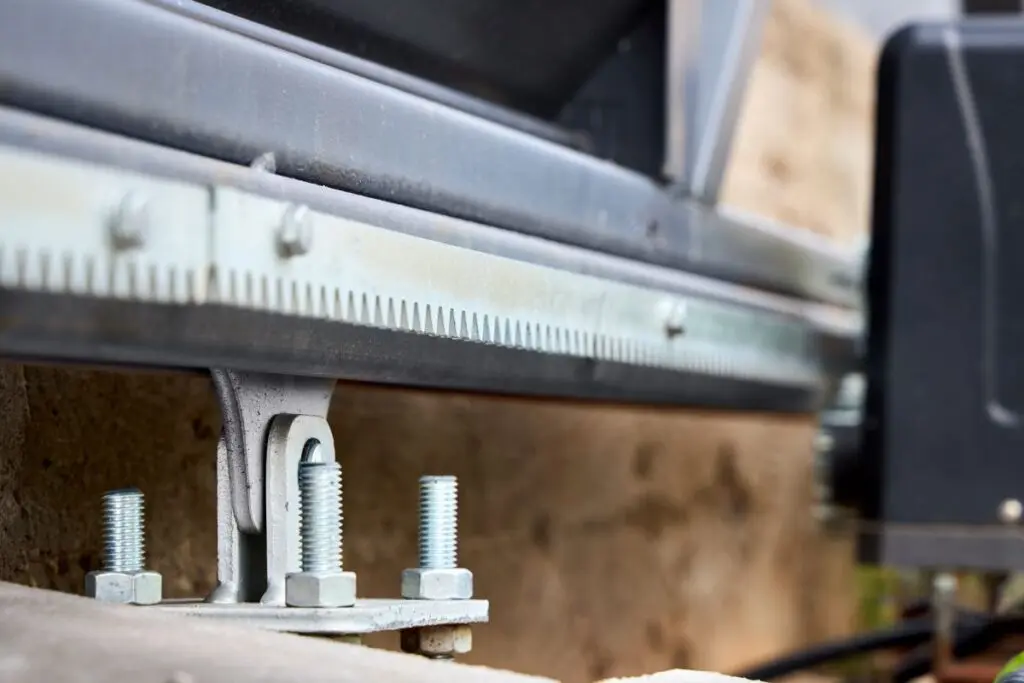
Rack-and-pinion slide gate operators drive the gate using a toothed gear rack bolted along the gate that meshes with a pinion gear on the operator. This design delivers smooth, precise, and quiet travel, and once installed it is highly reliable and needs little maintenance. Because the operator cabinet sits separately from the gate and leaves no grease trail, many owners find it more aesthetically pleasing than a chain drive. The main consideration is that rack-and-pinion units are less common in the United States, so it helps to choose a well-supported brand and an installer familiar with them, with operator units typically running $700 to $1,500.
- Best for: Homeowners wanting quiet, smooth, low-maintenance operation.
- How it works: A pinion gear drives a toothed rack bolted to the gate.
- Advantages: Quiet travel, high reliability, and no grease trail.
- Operator cost: Approximately $700 to $1,500 for the unit before installation.
3. Rail-Drive and Heavy-Duty Operators
Rail-drive and heavy-duty slide gate operators are built for the largest and heaviest gates, using a rail system that gives them a long reach and substantial pulling power. These operators are common where security is a top priority and gates are especially large, such as commercial, industrial, and high-security sites. Their strength and long reach make them ideal for gates that exceed what chain or rack-and-pinion operators are rated to move. Because they are engineered for demanding, high-cycle use, rail-drive and heavy-duty units cost more, with operator prices commonly running $1,300 to $3,700 or higher depending on capacity.
- Best for: Very large, heavy gates and high-security or commercial sites.
- How it works: A rail system delivers long reach and strong pulling power.
- Strength: Handles gate weights beyond chain or rack-and-pinion limits.
- Operator cost: Roughly $1,300 to $3,700-plus depending on capacity.
Slide Gate Operator Costs and What to Look For
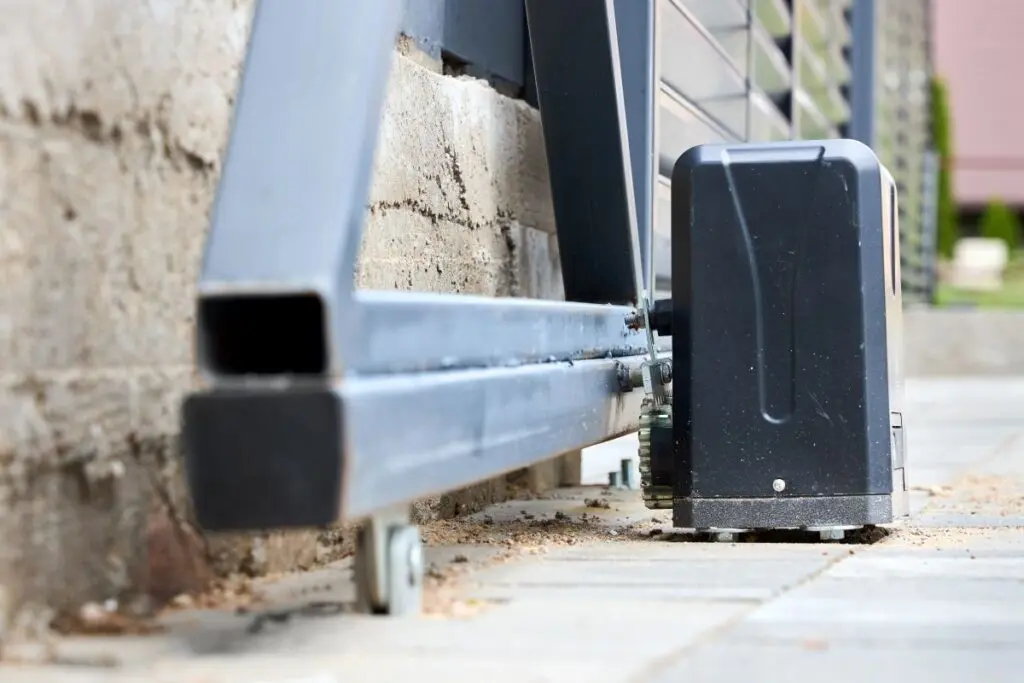
Beyond the operator unit itself, the full cost of automating a sliding gate includes professional installation and accessories, and several key specifications determine whether an operator will last. Weighing both cost and features together helps you make a choice you will not regret.
What Slide Gate Operator Installation Costs
Slide gate operator installation costs more than the operator unit alone, since professional setup involves mounting, wiring, track work, safety devices, and testing. Automating an existing gate typically runs $600 to $3,000 including materials and labor, while heavier gates and added features push toward the higher end. According to Angi, automatic gate installation averages around $4,000, with most homeowners spending between $2,380 and $8,000 depending on gate size, the automation system, and labor. Accessories such as keypads, sensors, and intercoms add to the total, so it pays to confirm exactly what each estimate includes.
- Automating a gate: Roughly $600 to $3,000 including materials and labor.
- Heavier gates: Larger, higher-cycle gates raise the installed cost.
- Accessories: Keypads, sensors, and intercoms add to the base price.
- Clarify estimates: Confirm whether the operator, labor, and extras are included.
Key Features to Look For
The key features to look for in a slide gate operator are the weight and length rating, duty cycle, power source, and safety devices that match your gate and daily use. Choosing an operator rated comfortably above your gate’s actual weight leaves a margin that extends motor life, while the duty cycle should suit how many times the gate opens each day. Power options include standard AC and solar-capable models ideal for rural gates far from an electrical hookup, and battery backup keeps the gate working during outages. Safety devices such as photo eyes and contact edge sensors are essential, since they stop or reverse the gate to protect people, pets, and vehicles.
- Weight and length: Pick a rating comfortably above your gate’s actual size.
- Duty cycle: Match the operator to how often the gate will run daily.
- Power and backup: Consider AC, solar, and battery backup for outages.
- Safety sensors: Photo eyes and edge sensors protect people and vehicles.
Frequently Asked Questions About Slide Gate Operators
How much does a slide gate operator cost?
A slide gate operator unit typically costs $700 to $1,500 for residential chain-drive and rack-and-pinion models, while heavy-duty and rail-drive units can run $1,300 to $3,700 or more. Adding professional installation brings the total higher, with automating an existing gate averaging $600 to $3,000. Request an itemized quote so you can see the operator, labor, and accessories separately.
Which is better, chain drive or rack-and-pinion?
Chain drive is the most popular and cost-effective option for most residential gates, while rack-and-pinion offers quieter, smoother travel and needs less maintenance. Rack-and-pinion is less common in the United States, so support and installer familiarity matter. The best choice depends on your budget, gate weight, and preference for quiet operation.
Can I install a slide gate operator myself?
Some slide gate operators are sold as DIY kits, but the mounting, track alignment, wiring, and safety sensor setup are easy to get wrong. Errors can leave the gate unreliable or unsafe for children and pets. Professional installation ensures the operator is correctly sized, aligned, and equipped with working safety devices.
How long does a slide gate operator last?
A quality slide gate operator typically lasts 10 to 15 years with regular maintenance, though lifespan depends on the daily cycle count, gate weight, and weather exposure. Choosing an operator rated above your gate’s weight and keeping the track clean extends its life. Chain and battery components may need service sooner than the motor.
Do slide gate operators work during a power outage?
Many slide gate operators include battery backup that keeps the gate working during a power outage, and solar-powered models run independently of the grid. Without backup, operators have a manual release, often key-operated, so you can move the gate by hand. Battery backup is a worthwhile feature for uninterrupted access.
What causes a slide gate operator to stop working?
Common causes include a worn drive chain or gear, debris in the track, a failed control board, a dead battery, or a power issue. Regular maintenance and keeping the track clear prevent many of these problems. A technician can diagnose whether the fault is mechanical, electrical, or a power supply issue.
Why Cheney Door Is Your Best Choice for Slide Gate Operators
When you need a sliding gate that opens smoothly and reliably every time, Cheney Door has the expertise to match the right operator to your gate and install it safely. Locally owned and family-run since 1971, our team has spent more than five decades installing and servicing gate and door systems across the region, and we back our work with 24/7 emergency service so a gate that will not open or close is never left unattended. Our technicians assess your gate’s weight, length, and daily use to recommend the right chain, rack-and-pinion, or rail-drive operator, then handle the mounting, track alignment, wiring, and safety sensor setup that DIY kits so often get wrong. Because a dependable slide gate operator depends on correct sizing, precise installation, and working safety devices, trusting the job to a seasoned local team protects both your investment and everyone who uses the gate. Reach out to Cheney Door today for expert guidance on the right slide gate operator for your property, and request your free quote to bring smooth, secure automation to your sliding gate.