
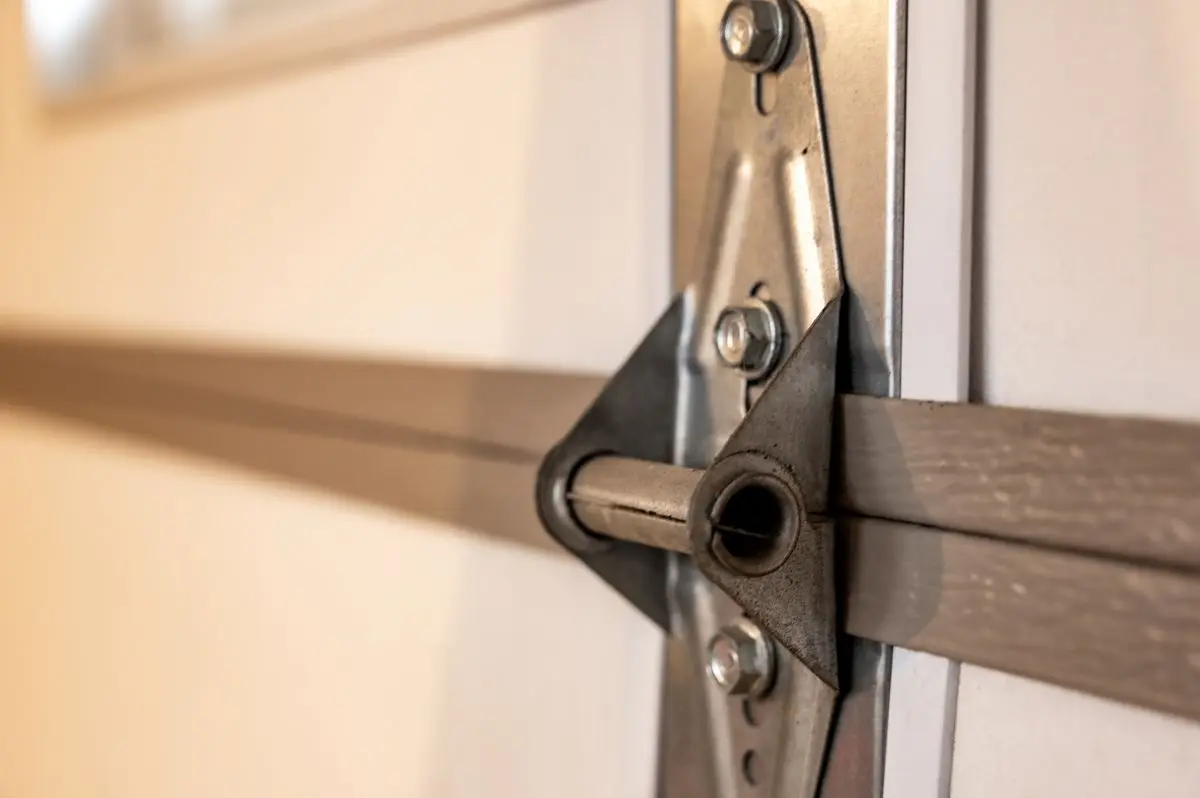
Garage door hinges are the metal plates that connect each panel of your sectional door, letting it bend and follow the curved track as it opens and closes. Though small and easy to overlook, these hinges carry real stress every cycle, and when one cracks or wears out, you get loud noises, jerky movement, or even sagging panels. This guide explains the three main types of hinges, decodes the numbering system stamped on each one, and walks through the warning signs that tell you a hinge needs attention.
Here is what you will learn in the sections below:
- The three types: How standard, heavy-duty, and commercial-grade hinges differ and which suits your door.
- The numbers: What the number stamped on each hinge means and why matching it matters.
- Failure signs: The noises and behaviors that signal a worn or broken hinge.
How Garage Door Hinges Work
Garage door hinges connect the individual panels of a sectional door so the whole unit can flex and move together along the track. Understanding their role and the numbering system that governs their placement makes it far easier to keep your door running smoothly.
The Role Hinges Play in a Sectional Door
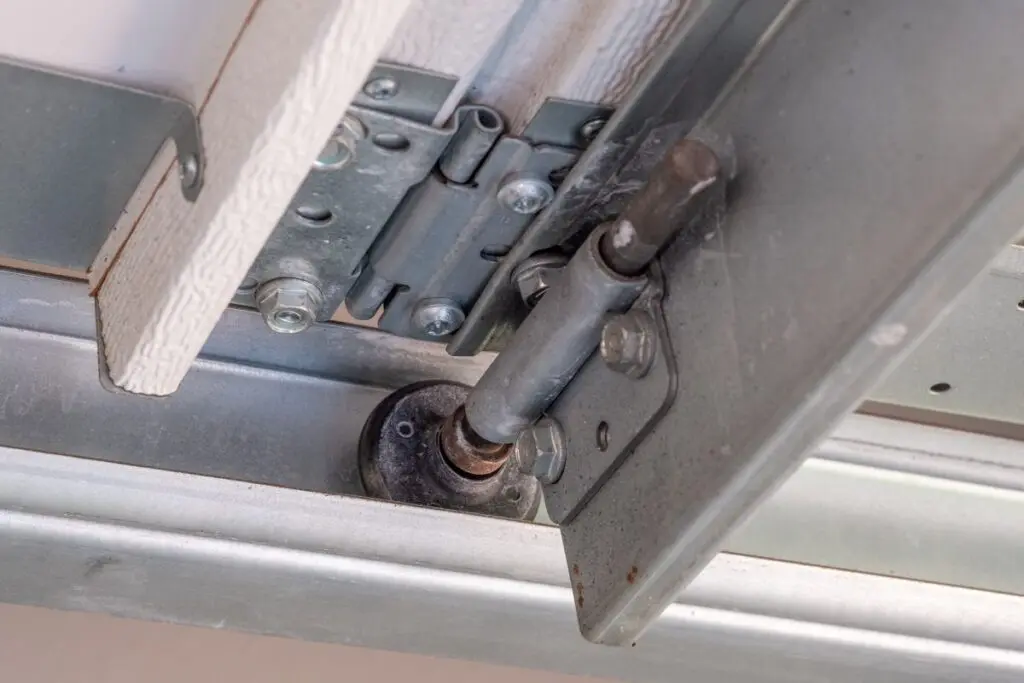
Hinges are what allow a sectional garage door to bend at each panel joint and curve from vertical to horizontal as it travels up the track. Without properly working hinges, the panels cannot flex in sequence, and the door binds, sags, or refuses to move smoothly. Many hinges also carry the rollers that ride in the track, so a worn hinge can throw off roller alignment and strain the whole system. Because every hinge shares the load of a heavy door through thousands of cycles, keeping them sound is essential to safe, quiet operation.
- Panel connection: Hinges join each door section so it can flex as one unit.
- Track travel: They let the door curve from vertical to horizontal.
- Roller carriers: Many hinges hold the rollers that guide the door.
- Shared load: Each hinge carries part of a heavy door every cycle.
Understanding the Hinge Numbering System
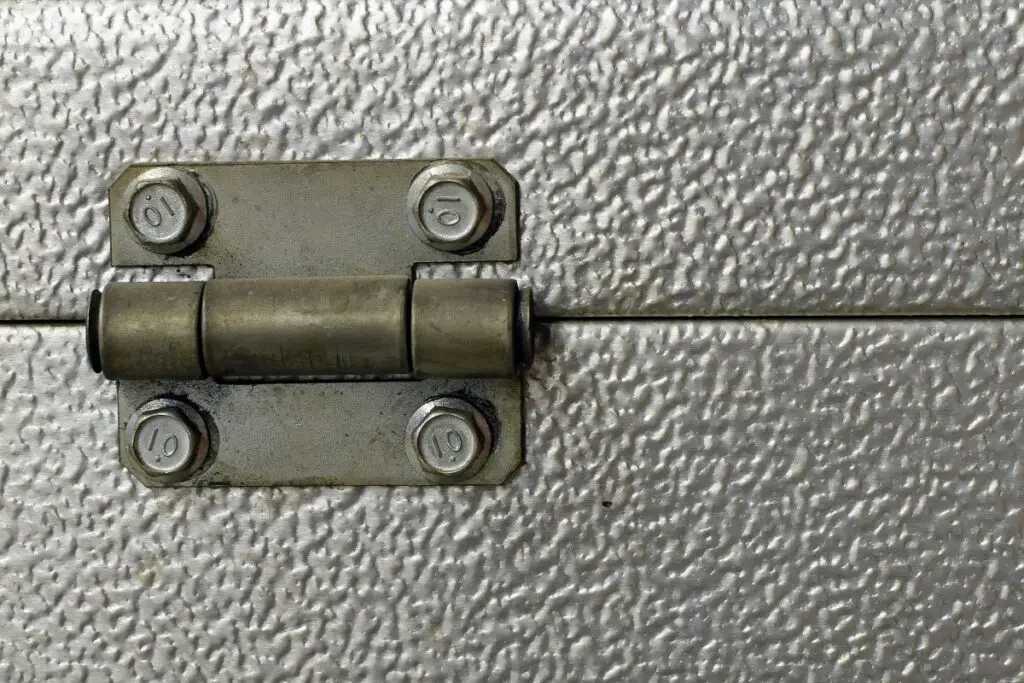
Every sectional garage door hinge has a number stamped on its leaf, and that number tells you where on the door the hinge belongs rather than its size or strength. Residential hinges are numbered roughly #1 through #5, while commercial hinges run higher, from about #6 through #11, to suit taller, heavier doors. A #1 hinge sits between the bottom and second panel, with each higher number moving up the door, and higher-numbered hinges are angled differently to match the curve of the track. Matching the stamped number exactly when replacing a hinge is critical, because the wrong number changes the roller offset and can bind the door or strain the track.
- Position, not size: The number marks where the hinge goes on the door.
- Residential range: Home doors use roughly #1 through #5 hinges.
- Commercial range: Larger doors use higher numbers, about #6 through #11.
- Match exactly: The wrong number alters roller offset and can bind the door.
3 Types of Garage Door Hinges
The three hinge types below range from standard residential plates to heavy-duty and commercial-grade hardware, each suited to a different door weight and usage level. Understanding the differences, along with the numbering system above, helps you choose hinges that keep your door aligned and running quietly.
1. Standard Residential Hinges
Standard residential hinges are the everyday hinges found on most home garage doors, numbered by position and sized for typical door weights. These are commonly 14-gauge wide-body hinges for durability, though thinner 18-gauge narrow-leaf versions appear on lighter doors. They connect the panels and, on the higher-numbered positions, carry the rollers, keeping the door aligned as it moves. For most homeowners, standard hinges matched to the correct number and gauge deliver reliable, quiet operation, and they are the most affordable hinge type to replace.
- Best for: Typical residential sectional garage doors.
- Common gauge: Usually 14-gauge wide-body for lasting durability.
- Function: Connect panels and, at higher numbers, carry rollers.
- Value: The most affordable hinge type to replace.
2. Heavy-Duty Hinges
Heavy-duty hinges are thicker, stronger plates built for high-use garages or larger, heavier doors that put extra strain on the hardware. If you have added insulation, switched to heavier panels, or use your garage as the family’s main entrance, upgrading to heavy-duty hinges can prevent premature failure. Their reinforced construction resists bending and cracking under repeated stress, extending the life of the hinge and protecting the panels and track. While they cost a bit more than standard hinges, the added strength is worthwhile for doors that see heavy daily cycling.
- Best for: High-use garages and larger or heavier doors.
- Construction: Thicker, reinforced plates resist bending and cracking.
- When to upgrade: After adding insulation, heavier panels, or heavy use.
- Payoff: Longer hinge life and better protection for panels and track.
3. Commercial-Grade Hinges
Commercial-grade hinges are the heaviest-duty option, built to handle the constant, demanding operation of warehouse, industrial, and other commercial doors. Numbered in the higher range and made from thicker steel, these hinges withstand dozens of cycles a day on large, heavy doors without wearing out prematurely. They are not interchangeable with residential hinges, since installing commercial hinges on a lightweight home door can strain the panels and opener, while using light hinges on a commercial door is a safety risk. For commercial applications, matching the correct commercial hinge number and gauge is essential to safe, reliable operation.
- Best for: Warehouse, industrial, and other commercial doors.
- Construction: Thick steel built for constant, heavy daily cycling.
- Not interchangeable: Do not mix commercial and residential hinges.
- Correct match: Proper number and gauge are essential for safety.
Recognizing and Addressing Hinge Failure
Catching a failing hinge early protects the rest of your door, since a worn or broken hinge strains the rollers, track, and opener if left unaddressed. Knowing the warning signs and the basics of replacement helps you act before a small problem becomes a bigger one.
Signs a Garage Door Hinge Is Failing
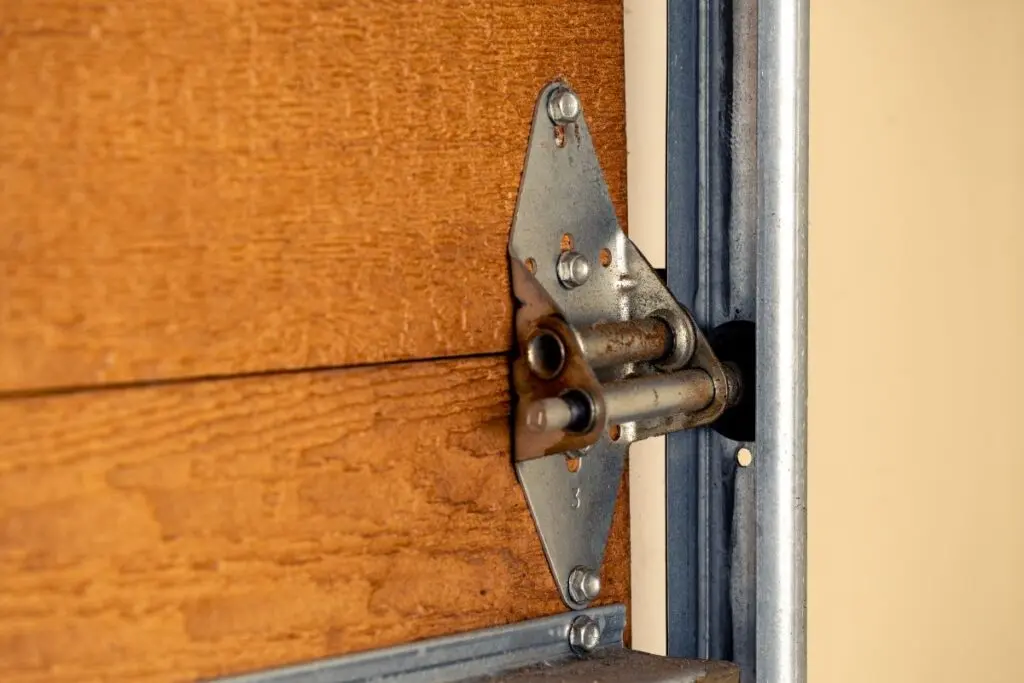
The clearest signs of a failing hinge are loud noises, jerky or uneven movement, sagging panels, and visible cracks or rust on the hinge itself. As hinges wear, loosen, or bend, the door may bind at the section joints, move unevenly, or develop a gap where a panel no longer sits flush. Squeaking and grinding often point to dry or worn hinges, though loose hardware and worn rollers can contribute too. According to Family Handyman, many garage door track rollers and hinges use unsealed bearings that wear out after years in a dirty environment, and tightening the hardware and lubricating the moving parts is a quick fix that takes less than an hour.
- New noises: Squeaking or grinding signals dry or worn hinges.
- Jerky travel: Binding or uneven movement points to a hinge problem.
- Sagging panels: A gap or misaligned section suggests a failing hinge.
- Visible damage: Cracks, bends, or rust mean the hinge needs replacing.
Hinge Replacement Basics and Safety
Replacing a garage door hinge can be a manageable repair, but it must be done carefully and one hinge at a time to keep the panels supported. Removing several hinges at once can cause panels to fall, which is dangerous, so a worn hinge is swapped individually and matched exactly to its stamped number and gauge. The most important safety rule is to stay well away from the torsion and extension springs, which store enormous tension and can cause serious injury if disturbed. Because hinge problems often overlap with roller and spring issues, having a professional assess and replace worn hinges is the safest way to restore smooth, quiet operation.
- One at a time: Replace hinges individually so panels stay supported.
- Match the number: Use the exact stamped number and correct gauge.
- Avoid the springs: Never disturb the high-tension springs.
- When in doubt: A professional can safely handle overlapping repairs.
Frequently Asked Questions About Garage Door Hinges
How much does it cost to replace garage door hinges?
Replacing garage door hinges typically costs $100 to $300 for a professional visit, depending on how many hinges need swapping and the hinge type. Standard residential hinges are the most affordable, while heavy-duty and commercial hinges cost more. Request an itemized quote so you can see parts and labor separately.
What do the numbers on garage door hinges mean?
The number stamped on a garage door hinge tells you its position on the door, not its size or strength. Residential hinges run roughly #1 through #5 from the bottom up, and commercial hinges run higher. Matching the correct number is important because it sets the roller offset and keeps the door aligned.
Can I replace a garage door hinge myself?
A handy homeowner can often replace a hinge, but it must be done one at a time to keep the panels supported, and you must stay clear of the high-tension springs. Match each new hinge to the exact stamped number and gauge. If the job overlaps with roller or spring issues, it is safer to call a professional.
How do I know if my garage door hinge is broken?
A broken hinge often shows visible cracks, bends, or rust, and it can cause loud noises, jerky movement, or a sagging, misaligned panel. If a section no longer sits flush or the door binds as it moves, inspect the hinges closely. A technician can confirm whether the hinge, roller, or another part is the cause.
How often should garage door hinges be lubricated?
Garage door hinges should be lubricated about every three to six months, using a garage-door-rated lubricant on the hinge pins. Homes with heavy daily use may benefit from lubricating every three months. Regular lubrication keeps hinges quiet, reduces wear, and extends their life.
Are all garage door hinges the same?
No, garage door hinges differ by number (position), gauge (thickness), and whether they are residential or commercial grade. Using the wrong hinge can bind the door, strain the panels, or create a safety risk. Always match the hinge to your door’s number, weight, and usage.
Why Cheney Door Is Your Best Choice for Garage Door Hinges
When a hinge starts squeaking, cracking, or throwing your door out of alignment, Cheney Door has the parts and expertise to get it running smoothly and quietly again. Locally owned and family-run since 1971, our team has spent more than five decades servicing and installing garage doors, and we back our work with 24/7 emergency service so a sagging or binding door is never left to wait. We work with trusted brands including Clopay, Amarr, Raynor, CHI, and Hampton Bay, and our technicians know exactly how to match each hinge to its correct number and gauge for a proper, lasting fit. Because hinge problems often overlap with rollers and high-tension springs, trusting the repair to a seasoned local team protects both your safety and the rest of your door system. Reach out to Cheney Door today for expert help with your hinges or any garage door concern, and request your free quote to restore smooth, quiet operation.